June 28, 2026
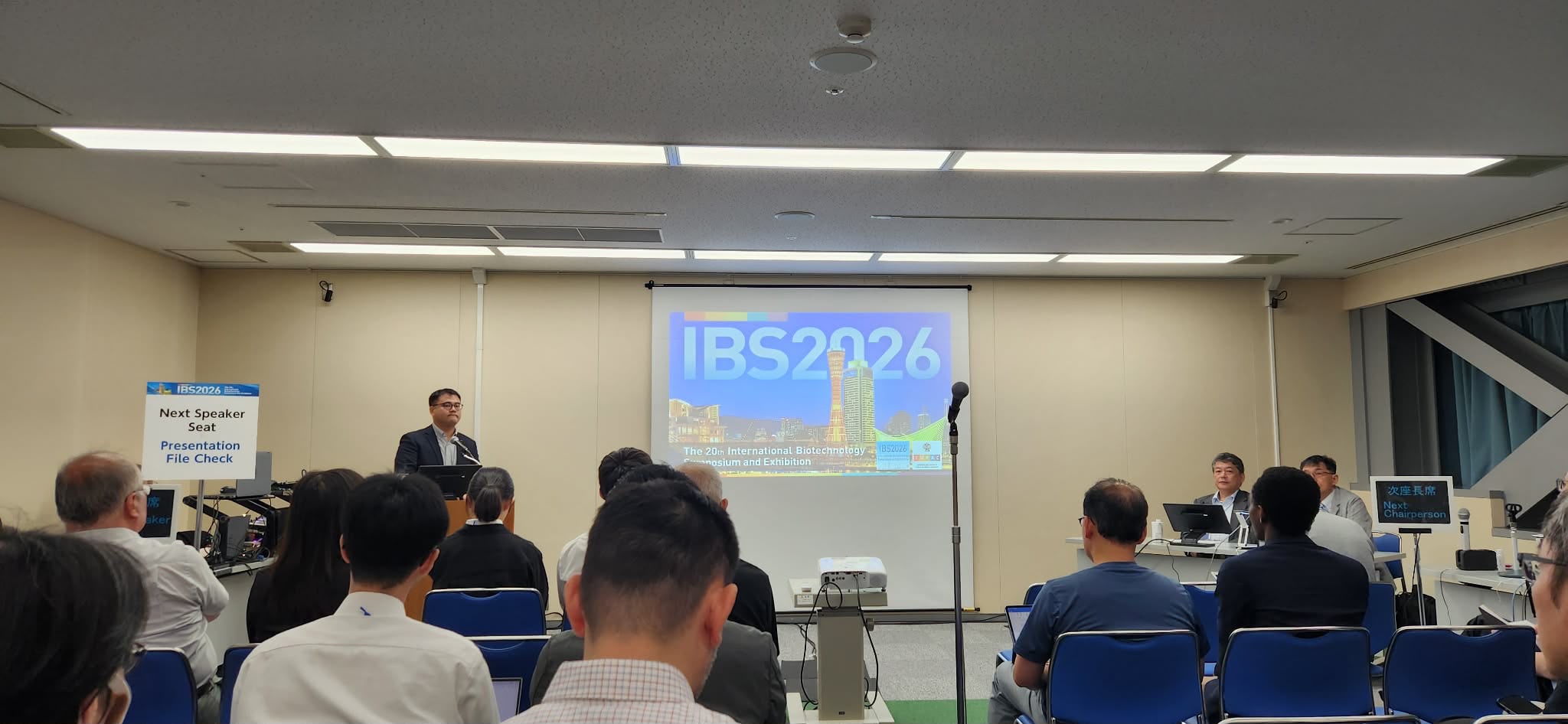
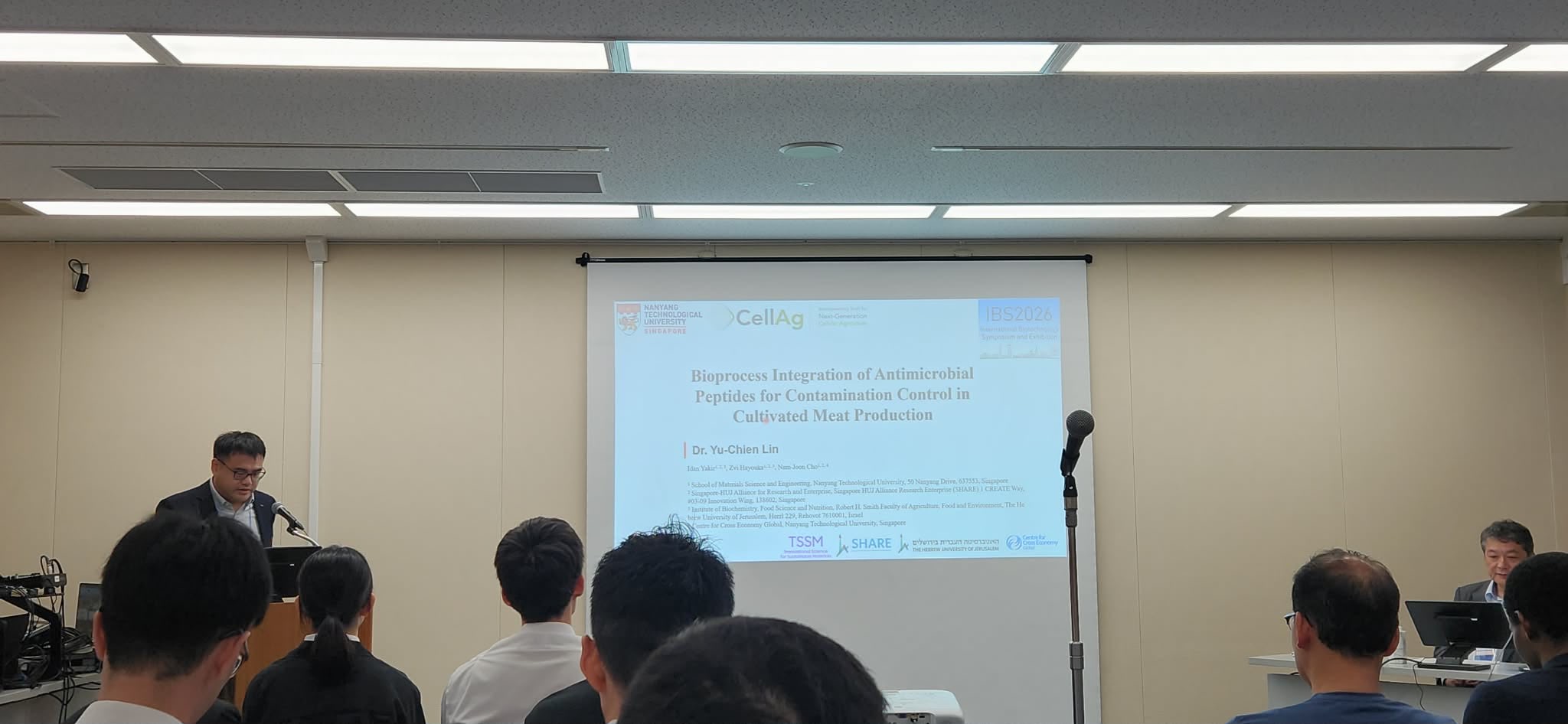
CellAg's Researcher, Dr. Yu-Chien Lin, presented in The International Biotechnology Symposium and Exhibition, Kobe, Japan.
Dr. Yu-Chien Lin presented the study of Antimicrobial Peptides as an Antibiotic-Free Strategy for Contamination Control in Cultivated Meat.
The challenge: Microbial contamination is a major bottleneck in scaling up cultivated meat production.
Antibiotic-free culture is required for food safety and regulatory compliance, which makes contamination harder to control.
The approach: Researchers tested antimicrobial peptides (AMPs) as an alternative to antibiotics, using a C2C12 mouse myoblast model of muscle cell growth and differentiation.
They evaluated the peptides against three representative bacteria: Escherichia coli, Staphylococcus aureus, and Listeria monocytogenes.
Testing covered both the proliferation and differentiation stages of culture.
Key findings:
- AMPs effectively suppressed bacterial growth in the early stages of culture.
- Their effectiveness declined during later differentiation. The likely cause is reduced bioavailability, as the peptides interact with cell-secreted extracellular matrix and differentiated myotubes.
- This reveals a stage-dependent limitation of AMPs in dynamic cell culture systems.
The solution: The team proposes a bioprocess integration strategy that uses temporal dosing and stage-specific optimization of AMP application.
Timing antimicrobial treatment to match cell culture dynamics controls contamination while preserving cell viability and differentiation potential.
Why it matters: The work underscores the role of peptide–cell–matrix interactions in complex co-culture systems.
It also offers a scalable framework for managing contamination without antibiotics in cultivated meat production.